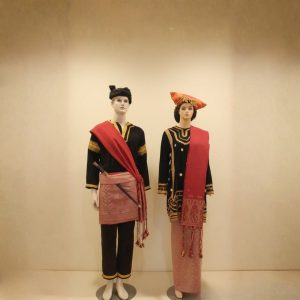
The traditional costume of Payakumbuh, a splendid heritage of Minangkabau culture, radiates grace, dignity, and cultural pride. The bride wears a distinctive tengkuluk tanduk, a buffalo horn-shaped headdress symbolizing wisdom and the noble status of Minangkabau women. Its vibrant orange-golden hue adorned with dangling brass ornaments adds a royal and elegant touch. Her attire consists of a black velvet blouse embroidered with gold threads around the neckline, chest, and sleeves — black representing steadfastness, while gold symbolizes prosperity and grandeur. Draped gracefully over her shoulder is a maroon songket shawl, signifying warmth and affection within the household. She completes her look with a pinkish-gold songket sarong, woven with intricate traditional motifs rich in cultural meaning.
The groom appears dignified and bold, donning a black deta headcloth, emblematic of courage and wisdom. His black velvet shirt with golden embroidery harmonizes beautifully with his partner’s attire. Around his waist, a woven songket sarong is fastened, with a traditional kris dagger tucked into it, symbolizing honor and responsibility. A maroon shoulder sash enhances his commanding presence, while black trousers with golden trim complete his elegant and stately look.
More than just a ceremonial costume, the traditional attire of Payakumbuh embodies the philosophy of Minangkabau life — a balance between gentleness and strength, dignity and wisdom — making it a captivating cultural treasure for visitors to admire.