
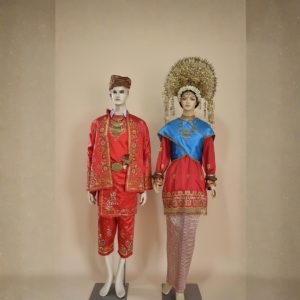
This photograph showcases a striking variant of the traditional bridal attire from Pariaman City, located on the coastal region of West Sumatra. The ensemble radiates grandeur through bold red fabric richly embroidered with gold, enhanced by an unexpected yet captivating touch of bright blue. Together, the bride and groom represent a balance of dignity and grace—core principles of Minangkabau’s matrilineal culture.
On the left stands the groom, wearing a brown deta headcloth, folded firmly to symbolize the masculinity and wisdom of a coastal Minangkabau man. Around his neck lies a combination of white and red fabrics, reflecting purity and ceremonial formality. His crimson shirt, adorned with intricate floral gold embroidery, represents virtue and prosperity. Layers of golden necklaces drape over his chest, signifying social honor and a husband’s duty to sustain and protect his family.
A golden belt, positioned squarely at his waist, embodies dignity and authoritative strength. His trousers, a red knee-length garment embroidered in gold, are tailored to grant freedom of movement, symbolizing readiness to work for the livelihood of the household. His modest gray shoes hint that a man’s greatness lies not in luxury, but in the noble way he walks through life.
To the right, the bride appears resplendent beneath a towering golden suntiang, meticulously crafted with hundreds of shimmering spikes and dangling ornaments. This headdress signifies the woman’s noble status and her central role in hereditary lineage. Just beneath it, a circular crown of white flowers encircles her head, representing her purity as she enters marriage.
She wears a red embroidered blouse, accentuated with a vivid blue shawl draped across her shoulders. The blue is symbolic of serenity, protection, and emotional warmth—a wife’s gentle strength in safeguarding her household. Around her neck rests a large gold necklace with disc-like shapes, reminiscent of the sun, symbolizing her authority in managing family inheritance in a matrilineal society.
Her lower garment is a soft pink woven songket sarong, falling elegantly to the ankles, emphasizing feminine grace and modest composure. The look is completed with golden shoes, representing honorable steps guided by tradition and virtue.
Together, the red of bravery, the gold of dignity, and the blue of tranquility form a visual philosophy of Pareanian marriage, rooted in the classic Minangkabau principle: Tradition founded upon faith, and faith upon the sacred Book. Beauty in this attire is therefore not merely decorative. It is a reflection of character, lineage, and moral elegance.