
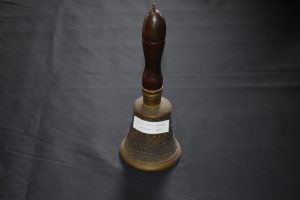
This cultural object is known as a bell (lonceng or loceng), originating from West Sumatra. It was commonly used within traditional Minangkabau communities, particularly in rural areas and religious learning centers known as surau.
The bell is made from a brass alloy with a finely carved wooden handle. It is crafted using traditional metal casting techniques, where molten brass is poured into a mold to form the conical bell shape, then engraved with geometric and floral patterns characteristic of Minangkabau artistry. The handle is attached using a metal joint, combining durability and elegance.
Traditionally, the bell served as a signaling instrument—to call people to prayer, mark study time, or indicate the start of communal activities. Its clear, resonant sound symbolizes unity, discipline, and communal harmony within Minangkabau society.
The bell’s aesthetic appeal lies in its balanced composition of metal and wood, as well as its intricate engravings that convey order and craftsmanship. Its sound embodies collective spirit and social awareness, values deeply embedded in Minangkabau culture.
Used in religious, educational, and social settings—particularly in surau and traditional schools—the bell now represents a significant piece of tangible cultural heritage. It showcases the refined metalcraft tradition of the Minangkabau people and is often displayed in museums or featured in cultural tourism exhibitions.