
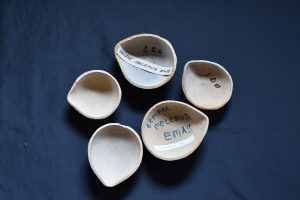
This cultural artifact is called a gold melting crucible (tempat peleburan emas), originating from West Sumatra, particularly from regions renowned for traditional goldsmithing, such as Padang Panjang and Tanah Datar. It represents a vital element of the Minangkabau metalcraft heritage.
The crucible is made from selected heat-resistant clay. It is manually shaped into a small bowl-like form with a slightly pointed edge for pouring molten metal. The clay is then dried and fired to strengthen it and make it resistant to extreme heat during metalworking.
Its primary function is to hold and melt gold or other precious metals before being shaped into jewelry or valuable ornaments. Within Minangkabau culture, it reflects the craftsmanship, patience, and artistic precision of traditional goldsmiths—skills passed down through generations symbolizing creativity and mastery.
Beyond its technical function, the crucible carries symbolic meaning as a metaphor for transformation—from raw material into refined beauty. Its simple, symmetrical form reflects the aesthetic of functional beauty inherent in traditional craftsmanship.
This tool is used in traditional goldsmith workshops during the jewelry-making process for items such as rings, bracelets, and necklaces. Today, it is preserved as a cultural artifact displayed in museums and craft exhibitions in West Sumatra, representing the enduring metallurgical expertise of the Minangkabau people.