
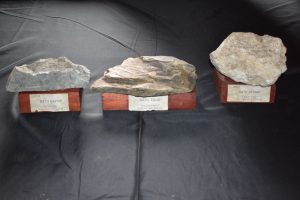
This collection showcases three distinct rock specimens that reflect the geological diversity of West Sumatra, each presented on a reddish-brown display base. The three types of rocks featured are Limestone, Slate, and Pumice.
The first specimen (left) is Limestone (Batu Kapur), a sedimentary rock typically light to dark grey in color. It is characterized by a relatively fine and layered texture. Limestone holds significant economic and historical value, often used in construction and as a material source. This rock originates from the Kenyian region of Agam Regency, an area known for its extensive carbonate rock formations.
The second specimen (center) is Slate (Batu Tulis), a fine-grained metamorphic rock derived from mudstone or shale. The rock is greenish-brown and is characterized by its ability to split into thin, flat sheets. Its shape is flat and angular. This rock originates from Tanjung Balit, Solok Regency. Slate was traditionally used as a roofing material or writing surface.
The third specimen (right) is Pumice (Batu Apung), a very lightweight and porous volcanic igneous rock. It is yellowish-brown cream in color and has a rough, dry sponge-like texture. This Pumice comes from Tandikat, Padang Pariaman Regency. The concurrent presence of Pumice, Limestone, and Slate in this collection highlights the contrast between volcanic products (Pumice), sedimentary rocks (Limestone), and metamorphic rocks (Slate) in the regional geology.