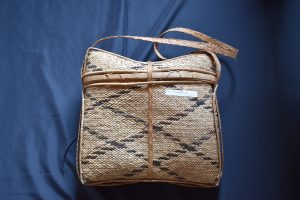
This cultural artifact is known as the Anak Nagari Bag or Rurung, a traditional woven bag originating from the Minangkabau people of West Sumatra, particularly from the rural areas of Tanah Datar and Agam regencies.
It is made from natural materials such as rattan, bamboo, or pandan leaves, woven by hand using cross-weaving and twining techniques. The entire process is carried out manually with simple tools, requiring precision and artistry to create symmetrical and durable geometric patterns.
Traditionally, the bag serves as a container for agricultural products, daily necessities, or traditional tools. Beyond its practical use, it symbolizes the Minangkabau people’s values of diligence, perseverance, and harmony with nature.
The zigzag or diagonal motifs represent balance between the physical and spiritual aspects of life. The regular geometric design also reflects the ideals of order, discipline, and social harmony deeply embedded in Minangkabau culture.
In daily life, this bag is used by farmers and villagers for practical purposes, yet today it has become a celebrated handicraft product frequently displayed at cultural festivals and sold as a high-value souvenir for visitors seeking authentic Minangkabau artistry.