From the heart of Luhak Nan Bungsu, Payakumbuh’s traditional attire stands as a masterpiece of Minangkabau heritage — where black velvet meets silvery-purple songket, blending grace, wisdom, and pride.
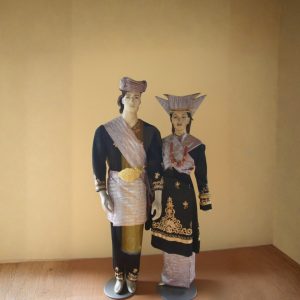
The bride wears the iconic tengkuluk tanduak gadang, a buffalo-horn-shaped headpiece made from shimmering silver songket, symbolizing female wisdom and dignity in Minangkabau culture. A fringe of small golden ornaments decorates her forehead, enhancing her noble aura. Her upper body is wrapped in a black embroidered blouse with gold thread, and over her shoulders lies a silver-lavender songket shawl. Around her neck, a red and yellow bead necklace adds warmth and charm — representing love and prosperity. Her skirt, made from silver songket with bamboo shoot motifs, reflects growth, balance, and resilience in life.
The groom wears a black taluak balango coat embroidered with gold, paired with a silver songket headcloth (deta) that signifies honor and wisdom. A matching songket sash crosses his chest, while a gold belt with engraved motifs marks strength and responsibility. His black trousers with golden embroidery and front songket overlay highlight elegance and leadership, a true symbol of Minangkabau masculinity.
The Payakumbuh traditional dress embodies harmony between humanity, tradition, and nature. Black stands for strength, silver for purity, and gold for nobility. Each thread tells a story — of wisdom, honor, and eternal grace.