
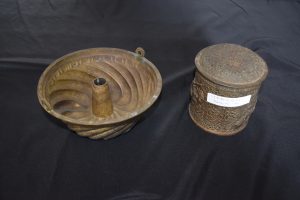
Water containers and cake molds have also become part of Minangkabau culture, carrying rich historical significance. The Minangkabau people highly value hospitality, often welcoming guests by serving drinks and a variety of traditional cakes to enjoy.
These water containers were traditionally made from bamboo, clay, or metal, while cake molds introduced during the Dutch colonial period were usually made from brass or cast iron. Communities living in villages (nagari) and hilly areas typically used large bamboo (known as aur or talang) water tubes to collect water from springs or wells. Clay containers (kendi or buyung) were used to store water, keeping it naturally cool and fresh thanks to the porous nature of the clay.
As for cake molds, they were commonly used to make signature Minangkabau delicacies such as kue sapik, kue satu, traditional sponge cakes, and kue bahulu. Beyond their practical purpose, cake molds symbolize togetherness, cooperation, and kinship, reflecting the communal culinary traditions of the Minangkabau people especially visible during Islamic festive occasions.